ONLY GOD IS AWESOME [vol. 1]
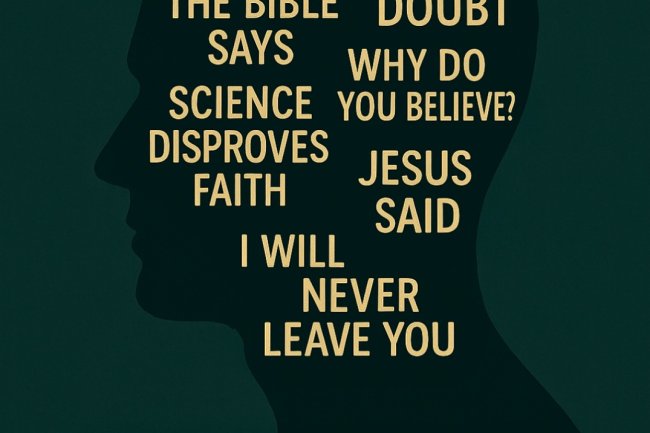
This article explores the historical and theological shift in the word "awesome," tracing how a term once reserved exclusively for God became a casual superlative for human experiences. It argues that this linguistic shift reflects a deeper transition in Western thought—from a God-centered worldview to one centered on human autonomy.
![ONLY GOD IS AWESOME [vol. 1]](https://acmtrainingroomltd.com/blog/uploads/images/202603/image_750x_69a953a6899d6.jpg)
ONLY GOD IS AWESOME [Vol. 1]
Bible Reading: Psalm 95:3–5 (ISV) “For the Lord is an awesome God; a great king above all divine beings. He holds in his hand the lowest parts of the earth, and the mountain peaks belong to him. The sea that he made belongs to him, along with the dry land that his hands formed.”
Section 1— Awesome God
The word awesome has become one of the most casually used expressions in modern culture. It is applied to everything from food to clothing, from relationships to movies, songs, and even sexual experiences. In contemporary speech, awesome sits comfortably beside words like cool, amazing, sweet, hot, and sexy. When describing music, art, poetry, performances, or novels, people often reach for superlatives such as “awesome,” “sublime,” “out of this world,” or “blew my mind.” These expressions are meant to convey the highest possible degree of admiration.
Yet historically, language associated with awe was never intended to describe ordinary human experiences. Words like awe‑inspiring originally referred to something that overwhelmed the mind with grandeur, majesty, or power — something that evoked reverence, admiration, or even fear. Etymologically, the English word awesome appears around the 1590s and meant “profoundly reverential.” It was not slang. It was sacred.
Even more striking is this: prior to the 13th century and the theological influence of Thomas Aquinas, vocabulary associated with awe was rarely used at all — and when it was, it was reserved almost exclusively for God. Not for creation. Not for human achievement. Not for the works of men’s hands. Only for the Creator.
Francis A. Schaeffer, in tracing the origins of modern uses of awesome, argues that before Aquinas, Western thought was essentially “Byzantine” in its approach to such concepts. In other words, the way people understood and used words of reverence was radically different from how we use them today. To appreciate Schaeffer’s point, we must briefly revisit the Byzantine world.
Jan van der Crabben, Founder and Editor‑in‑Chief of the Ancient History Encyclopedia, describes the Byzantine Empire as the Greek‑speaking continuation of the Roman Empire in the eastern Mediterranean — a civilisation profoundly shaped by Christianity. Byzantium, originally a small but strategic town on the Bosphorus, became the hinge between Europe and Asia. After Constantine the Great refounded the city in 330 CE and named it Constantinople, it became the political and spiritual centre of the Eastern Roman Empire.
By the fourth century, Christianity had become increasingly dominant. The Byzantine Empire was the first empire in history founded not only on political authority but also on the authority of the Church. The five patriarchates — Alexandria, Jerusalem, Antioch, Constantinople, and Rome — formed the backbone of Christian leadership. After the Great Schism of 1054, the Eastern Orthodox Church separated from the Roman Catholic Church, but the worldview of the empire remained deeply Christian.
This profoundly Christian worldview shaped the arts. Heavenly realities were considered so holy, so transcendent, and so far removed from earthly life that they could not be depicted realistically. Only symbols were permitted. In the baptistry mosaics of Florence, for example, Mary is not portrayed as a woman but as a symbol — because she was considered too sacred to represent in natural form. Conversely, nature — trees, mountains, landscapes — held little artistic interest except as background. Mountain climbing, Schaeffer notes, was not even considered a worthwhile activity; nature was not yet seen as something to be admired for its own sake.
This symbolic, reverential approach dominated until the emergence of artists like Cimabue (1240–1302) and his student Giotto (1267–1337). Their work marked the beginning of a shift: depictions of nature and humanity began to rival depictions of the divine. The Byzantine era had been an age of reverence for holy things — an age in which the sacred was so exalted that it could not be portrayed realistically. But this worldview was about to be challenged.
The shift came through the theological influence of Thomas Aquinas. Aquinas introduced a new way of thinking about humanity and the divine. Prior to him, mankind was viewed as utterly fallen and utterly depraved. Everything divine was par excellence; everything human was corrupted. But Aquinas proposed that the fall was only partial. Humanity, he argued, retained an intact intellect even though the will had fallen. This “partial fall” elevated human reason to a place it had never held before.
Schaeffer argues that this incomplete view of the fall made the human intellect autonomous — capable of operating independently of divine revelation. This autonomy, he suggests, laid the groundwork for the Renaissance.
Not all scholars agree with Schaeffer’s interpretation of Aquinas. Some argue that Aquinas did not believe the intellect was untouched by the fall, only that it was not totally depraved as Luther and Calvin later insisted. In the Summa Theologiae, Aquinas acknowledges that reason can know some truths about God, but revelation is still necessary because fallen humanity struggles to attain such knowledge without error. He also maintains that while humans can perform morally good acts in a limited sense, true virtue requires divine charity.
Nevertheless, when one traces Aquinas’s influence on Catholic theology, Schaeffer’s assessment gains weight. The Catholic Church, following Aquinas, maintained that human free will — though wounded — survived the fall. This view led to the condemnation of any teaching that claimed human free will was lost. It also contributed to Luther’s excommunication and sparked the famous debate between Luther and Erasmus, culminating in Luther’s Bondage of the Will.
Thus, Aquinas’s rejection of total depravity opened the door for human autonomy. Human intellect, no longer seen as wholly fallen, began to rise. Nature and human achievement began to rise with it. Eventually, as Schaeffer puts it, “nature enveloped grace.” What had once been reserved for God — reverence, awe, wonder — began to be applied to the works of men.
And this brings us to the central thesis: Only God is awesome.
Section 2 — The Renaissance
The theological shift introduced by Thomas Aquinas — the elevation of human intellect and the softening of the doctrine of total depravity — opened the door to what would later be called natural theology. If the intellect was not fully fallen, then reason could operate independently of Scripture. Humanity, made in the image of God and retaining a partially intact rational faculty, no longer needed to rely solely on divine revelation. Reason itself could become a pathway to truth.
This marked the beginning of an autonomous era. Philosophy, once tethered to Scripture, now felt free to explore without reference to divine authority. Human instinct and intellect, previously subordinated to revelation, were elevated to a place once reserved for the divine. From this moment forward, human reason was unleashed — and it would reshape the world.
To many observers, this development was not entirely new. It echoed the pattern Paul described in Romans 1, where fallen humanity, though aware of God, refused to honour Him. Instead, people exalted their own intellect, worshipped created things, and exchanged the glory of the incorruptible God for images of mortal beings, animals, and creeping things. Paul’s indictment — that humanity “worshipped and served the creature more than the Creator” — stands as a sobering commentary on the consequences of autonomous reason.
Schaeffer argues that this same dynamic re-emerged in the wake of Aquinas. Philosophy — literally “the love of wisdom” — began to “take wings,” soaring wherever human imagination desired, unrestrained by Scripture. And it was not long before this intellectual autonomy spilled over into the arts.
Cimabue, often regarded as a transitional figure between the Italo‑Byzantine style and the emerging naturalism of the Renaissance, was among the first to reflect this shift. Although he still relied heavily on Byzantine models, his work introduced more lifelike proportions and shading. His student Giotto would take this even further, becoming the first great artist of the Italian Renaissance.
Schaeffer notes that Cimabue and Giotto began to paint nature as nature. Instead of placing all sacred subjects above the symbolic “line of grace,” they introduced naturalistic elements into their compositions. At first, the divine figures remained symbolic while the lesser elements — landscapes, animals, architecture — were rendered realistically. But this balance would not last.
A major turning point came with Dante Alighieri (1265–1321). His Divine Comedy mirrored in literature what Cimabue and Giotto were doing in art. On the surface, the poem recounts Dante’s journey through Hell, Purgatory, and Heaven. But at a deeper level, it represents the soul’s ascent toward God. Dante drew heavily on medieval Christian theology, especially the Thomistic philosophy of Aquinas. Indeed, the Divine Comedy has often been called “the Summa in verse.”
With Dante, the shift accelerated. Nature — the created order — began to take on a new importance. Church tradition and philosophical reasoning increasingly shaped people’s understanding of the world, sometimes overshadowing Scripture itself.
It is important to note that appreciating nature is not inherently wrong. God created the natural world, and it is right to admire its beauty. But Aquinas’s theological framework opened a door that allowed human reason to operate independently of divine revelation. This autonomy, though subtle at first, would eventually undermine the reverence once reserved for God alone.
Throughout the Renaissance — from Dante to Michelangelo — nature became increasingly autonomous. Schaeffer observes that nature was “set free from God” as humanistic philosophers operated with growing independence. By the height of the Renaissance, nature had “eaten up grace.” What had once been sacred was now placed on the same level as human achievement.
The Renaissance accomplished what the great empires of the ancient world could not. Neither Egypt under the Pharaohs, nor Babylon under Nebuchadnezzar, nor Persia under Xerxes, nor Greece under Alexander, nor Rome under its emperors succeeded in elevating human intellect to such heights. But the Renaissance did. With autonomous man clutching his supposedly “not‑fully‑fallen” intellect, humanity achieved a cultural and philosophical revolution unmatched in previous history.
Art and culture historian Jacob Burckhardt, in The Civilization of the Renaissance in Italy (1860), describes the Renaissance as a rebirth — a revival of classical learning and a profound transformation of European intellectual life. Following the fall of Constantinople in 1453, Greek scholars and manuscripts poured into Italy, accelerating this cultural awakening. While the Byzantine Empire had been predominantly Christian, the conquering Ottoman Turks were Muslim, and the resulting migration of scholars reshaped Western thought.
By the 16th century, Renaissance influence permeated literature, philosophy, art, music, politics, science, and religion. Renaissance scholars embraced the humanist method, seeking realism and human emotion in art — a stark contrast to the medieval focus on symbolic representation. Educational reform spread. Diplomacy evolved. Scientific inquiry shifted toward observation. The Renaissance became the bridge between the medieval world and modern history.
Yet beneath the artistic brilliance and intellectual achievement lay a subtle but profound shift: nature had devoured grace. The divine was no longer supreme. Human creativity, human intellect, and human achievement now stood beside — and often above — the sacred.
This shift would soon manifest dramatically in the visual arts.
Section 3 — The Rise of Naturalism in Art: Van Eyck, Masaccio, and the Death of Grace
One of the clearest windows into the shifting worldview of the Renaissance is found in its art. As human reason rose in prominence and nature gained autonomy, artistic expression began to reflect this new hierarchy. What had once been a world in which divine realities towered above human concerns now became a world in which nature — and eventually human desire — overshadowed the sacred.
A striking example comes from a miniature painted around 1415, known as the Grandes Heures de Rohan. The scene depicts Mary, Joseph, and the infant Jesus fleeing into Egypt. As they pass a field, a miracle occurs: the grain grows instantly, allowing a farmer to harvest it. When soldiers arrive and ask when the Holy Family passed by, the farmer replies that it was when he was sowing the seed — and the soldiers turn back.
The story itself is not the point. What matters is the composition. Mary, Joseph, the child, a servant, and the donkey dominate the top of the image, large and imposing. At the bottom, the farmer and soldiers appear tiny. This visual hierarchy reflects the medieval worldview: grace above, nature below. The divine is immense; the human is small.
But this would soon change.
In Northern Europe, Jan van Eyck opened the door to a radically new approach. He painted nature as nature — not as symbolic background, but as a subject worthy of attention in its own right. In 1410, he produced what is considered the first true moonscape. In his depiction of Jesus’ baptism, the background includes a real river, a real castle, and real houses. Nature had become important.
The next major shift came in 1435 with Van Eyck’s Madonna of Chancellor Rolin, now housed in the Louvre. In this painting, the chancellor kneels before Mary — but he is the same size as she is. This was revolutionary. Mary was no longer remote, exalted, or symbolically elevated. The chancellor, a mere man, stood on equal visual footing with the Mother of Christ. The hierarchy of grace over nature had been flattened.
Schaeffer argues that from this moment onward, Western art entered a struggle to reconcile nature and grace — a struggle it would ultimately lose.
Shortly after Van Eyck, the painter Masaccio emerged as one of the most influential artists of his generation. He introduced true perspective, realistic spatial depth, and accurate lighting. For the first time, shadows fell naturally according to the direction of light. His figures possessed weight, movement, and humanity. Together with Van Eyck, Masaccio demonstrated that nature could be rendered with astonishing realism — realism that could have served a biblical worldview, had it remained subordinate to grace.
But as Schaeffer observes, the better humanity became at depicting nature, the less significant grace became. The more skillfully artists portrayed the created world, the more the Creator receded from view.
This trend accelerated rapidly. Artists who would once have portrayed Mary only as a symbol now painted her as a naturalistic woman. In 1465, Filippo Lippi produced a Madonna that shocked his contemporaries. The woman he painted as Mary was not a symbolic representation of holiness — she was his mistress, Lucrezia Buti, a nun he had abducted. The sacred had been replaced by the sensual.
Schaeffer notes that such a thing would have been unthinkable in earlier centuries. But nature, once made autonomous, inevitably devours grace.
Worse was yet to come. Around 1450, the French painter Jean Fouquet depicted the king’s mistress, Agnes Sorel, as the Virgin Mary — and he painted her with one breast exposed. Everyone knew who she was. Everyone knew she was the king’s mistress. Yet she was presented as the Mother of God.
This was not merely artistic experimentation. It was a cultural declaration: Grace is dead. Nature has triumphed.
The pattern is consistent throughout Scripture and history. When the lower realm is placed on equal footing with the higher, the lower always consumes the higher. In Pharaoh’s dream, the lean cows devour the fat cows; the thin ears of grain swallow the full ones. Cain kills Abel. The flesh overpowers the spirit. Fallen humanity, no matter how gifted, cannot sustain reverence for the divine without the restraining influence of the Holy Spirit.
Thus, by the time of Leonardo da Vinci and Raphael, Renaissance thought had fully embraced the autonomy of man. Platonic ideals replaced Aristotelian categories. Universal forms and human reason were exalted. Meanwhile, the Reformation — emerging in the same era — insisted that the whole person had fallen in Adam: intellect, will, and affections alike. Only God is autonomous. Only grace saves.
But Renaissance humanism, grounded in Aquinas’s partial‑fall theology, elevated human reason to a place parallel to grace. Human intellect could reason its way to salvation. Human creativity could rival divine revelation. Human achievement could stand beside — or above — the sacred.
And so, in the clash between Renaissance humanism and Reformation theology, the Renaissance won the cultural imagination. Grace was eclipsed. Nature reigned.
THE END OF PART 1
What's Your Reaction?









![ONLY GOD IS AWESOME [vol. 2]](https://acmtrainingroomltd.com/blog/uploads/images/202603/image_650x433_69aec28018e23.jpg)