Intelligent Christianity: Recovering the Life of the Mind in the Life of Faith
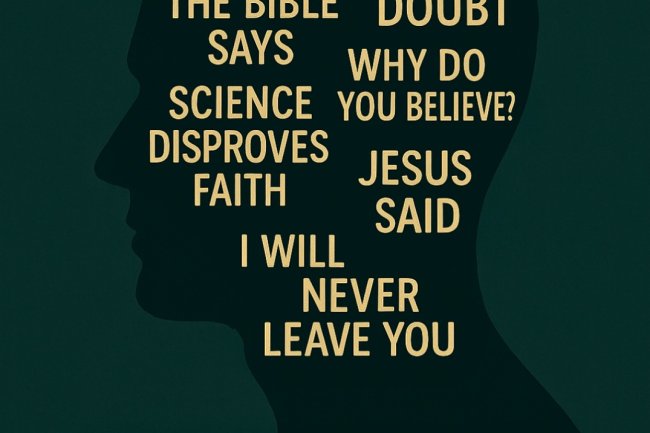
Christianity is often falsely stereotyped—both by secular critics who view it as an intellectually shallow crutch, and by some believers who think faith requires leaving your brain at the door. In reality, historical and biblical Christianity demands rigorous intellectual engagement. It views reason and intellect as God-given gifts meant to work in partnership with faith to discern truth, combat extremism, and engage with the culture.
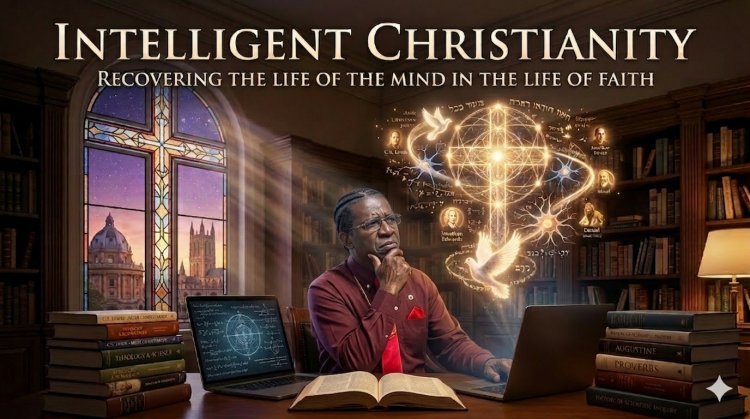
Intelligent Christianity: Recovering the Life of the Mind in the Life of Faith
Christianity and intelligence are rarely paired in public imagination. Hence, “Intelligence and Christianity are two words which aren’t often used together.” For many critics—atheists, sceptics, secular humanists, and communists—Christianity appears intellectually thin, weighed down by what they see as primitive notions of heaven and hell. These doctrines, they argue, encourage passivity: a willingness to endure injustice now in exchange for reward or punishment later. Karl Marx famously sharpened this critique, calling religion “the opiate of the people” and describing it as “a palliative for worldly woes… preventing people from seeking real solutions.”
Yet on the opposite extreme stands a different challenge: believers who resist any suggestion that Christianity should be intellectually rigorous. Some insist that because “God calls the simple, the unqualified, the vanquished, even the weird,” intellectual discipline is unnecessary. This mindset has contributed to a proliferation of denominations, a suspicion of theological education, and a culture where “anyone anywhere at any time is free to start their own sect or denomination.”
Between these two extremes lies a vital truth: Christianity is, and has always been, an intellectually rich faith.
The Biblical Roots of an Intelligent Faith:
“Is it true that we need not apply intelligent thought to our Christian faith?” Scripture answers with a resounding no.
Several biblical figures embody the union of faith and intellect:
- Daniel—chosen because he was “well skilled in the things of both the Jews and later those of the Chaldeans.”
- Moses—trained “in all the language, ways and cultures of the Egyptians.”
- Paul—a rigorously educated Pharisee.
- Luke—a physician.
- Matthew—a tax collector.
These were not accidental geniuses; they were intentionally prepared instruments. Their intellectual formation was part of their spiritual calling.
Scripture itself affirms that intelligence is a divine gift: “Intelligence, viewed as an endowment from God (Daniel 1:17) enabling comprehension of creation and commandments.” Wisdom, understanding, and reason are repeatedly presented as God-given tools for discerning truth (Proverbs 2:6; Isaiah 1:18).
The Intellectual Heritage of the Church
Far from being anti-intellectual, Christianity has been shaped by some of history’s greatest minds.
The canonisation of Scripture—a centuries-long process involving councils such as Hippo (393) and Carthage (397), later affirmed at Trent (1546).
Reformers and theologians—Martin Luther, John Knox, John Calvin, each deeply educated and intellectually formidable.
Jonathan Edwards— “regarded by some as America’s greatest ever scholar,” a philosopher-theologian of the Enlightenment.
C. S. Lewis—a literary scholar at Oxford and Cambridge whose work demonstrates that faith and reason are mutually enriching.
These figures show that Christianity has never been a refuge for the intellectually lazy. Rather, it has been a catalyst for scholarship, philosophy, science, and cultural transformation.
What Intelligent Christianity Really Means
“Intelligent Christianity means using reason and intellect, seen as God-given gifts, to understand faith, discern truth, and apply wisdom.”
This vision includes several key commitments:
1. Reason as a Partner to Revelation
Christians are invited to “reason together” with God (Isaiah 1:18). Faith is not blind; it is illuminated by logic, reflection, and disciplined thought.
2. Wisdom as Spiritual Formation
Wisdom is not merely intellectual achievement but moral discernment—understanding God’s will and living it out.
3. Avoiding Extremes
True Christianity which is intelligent in nature warns against both rationalism (reason as supreme) and anti-intellectualism (reason rejected). Intelligent Christianity seeks a balanced, thoughtful faith.
4. Christianity as an Education
C. S. Lewis’s insight is quoted powerfully: God is not fond of “intellectual slackers.” Christianity “ought to be an education in itself but to access that education demands the whole of your brains.”
5. Active Discovery
True faith involves continual exploration, reflection, and growth. “True intellectual engagement involves continuous exploration and reflection, particularly when discussing God and faith.”
Why Intelligent Christianity Matters Today
In a world of misinformation, shallow spirituality, and cultural fragmentation, intelligent Christianity is not optional—it is essential.
- It equips believers to articulate their faith with clarity and conviction.
- It strengthens the Church against error, extremism, and manipulation.
- It honours God by using the full capacity of the mind He created.
- It bridges the gap between faith and science, theology and culture, devotion and
“Christianity does not ask us to abandon our minds. It commands us to love God with all of them.”
What's Your Reaction?