Woke: Staying Conscious of the World’s Hidden Truths — Why “Woke” Is Not All Bad
The article explores the term "woke" beyond its current status as a political lightning rod, tracing its origins from a Black survival tactic to a modern call for social consciousness and biblical justice.
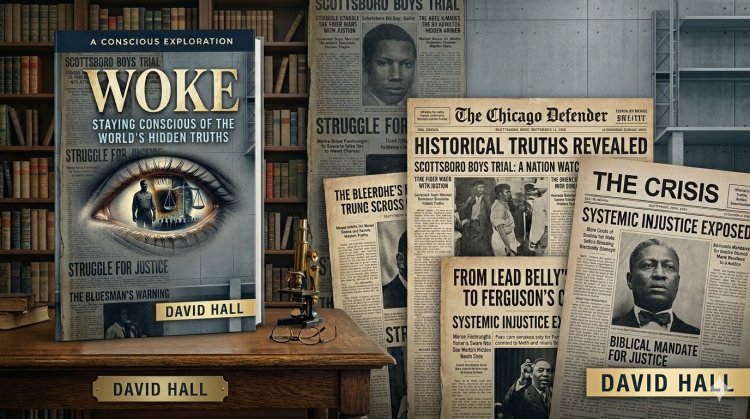
Woke: Staying Conscious of the World’s Hidden Truths — Why “Woke” Is Not All Bad
Few words spark more tension among conservative Christians today than the term woke. For many, it conjures images of something unwholesome or even diabolic. Yet the truth is far more nuanced. Woke has traveled a long road—from a quiet survival tactic within the Black community to a political lightning rod in modern culture. At its core, however, the word simply means awareness.
And awareness, especially of injustice, is not only good—it is biblical.
Why Awareness Still Matters
The idea that slavery, indentureship, colonialism, and other historical atrocities are “in the past” and therefore irrelevant today is not only naïve but intellectually shallow. The transatlantic slave trade, the Holocaust, apartheid, and modern forms of exploitation all mirror humanity’s darkest impulses. These events left behind generational trauma, stolen futures, and deep societal wounds.
Such horrors do not disappear from memory, nor should the mindsets that produced them be allowed to re‑emerge. This is precisely why the call to “stay awake” remains vital.
Where the Term Woke Came From
The history of woke is a remarkable example of how language evolves—especially language born from struggle.
1930s: A Warning for Survival
The earliest recorded sociopolitical use comes from blues legend Huddie “Lead Belly” Ledbetter. In his 1938 song Scottsboro Boys—which recounts the true story of nine Black teenagers falsely accused of raping two white women—Lead Belly ends with a spoken warning to Black travelers in the South: “I advise everybody, be a little careful when they go along through there—best stay woke, keep their eyes open.” At this stage, stay woke was not philosophy; it was literal survival.
1960s–1970s: Entering the Cultural Lexicon: By the mid‑20th century, the term expanded into a broader sense of social consciousness.
- 1962: Novelist William Melvin Kelley used the term in a New York Times article, “If You’re Woke You Dig It,” one of the first mainstream appearances of the word.
- 1971: In the play Garvey Lives! by Barry Beckham, a character declares, “I been sleeping all my life. And now that Mr. Garvey done woke me up, I’m gon’ stay woke. And I’m gon’ help him wake up other black folk.”
2008: Erykah Badu and a New Generation The term remained largely within the Black community until Erykah Badu’s 2008 song Master Teacher, with its refrain “I stay woke.” Here, woke shifted from “don’t get arrested” to “stay conscious of the world’s hidden truths,” becoming a badge of intellectual and social awareness.
2014: The Ferguson Uprising The turning point from slang to movement came after the shooting of Michael Brown in Ferguson, Missouri. The hashtag #StayWoke surged as activists used it to:
- share footage of police activity,
- encourage vigilance when the news cycle moved on,
- connect various social justice movements.
As the term entered mainstream politics, its meaning became diluted—and eventually distorted. What began as a tool of the powerless became a label used by the powerful to dismiss anything deemed “too progressive.”
How the Church Became Entangled in the Debate
Polling shows that many conservative Christians—including a significant number of self‑identified evangelicals who rarely attend church—have shifted Christianity from a faith to a political identity. In this framework, wokeness becomes an enemy, often framed as an anti‑God agenda.
This reaction is fueled by decades of rhetoric insisting that America was founded as an explicitly Christian nation. Such narratives leave little room for nuance or honest historical reflection.
As a result, movements like Christian Nationalism have gained traction. Many who loudly wave Bibles they seldom read and speak of a Jesus they seldom follow have embraced this ideology as a weapon against the so‑called “woke agenda.” Christianity, in these cases, becomes a tribal badge rather than a transformative faith.
Today, fear and anxiety drive some Christians to lash out at perceived outsiders—even when those “outsiders” are their own neighbors who simply hold a different worldview. This raises serious concerns about the integrity of the Christian witness. When the core doctrines of the faith are overshadowed by political identity, Christianity becomes vulnerable to distortion.
The Heart of the Matter: What Being Woke Actually Means
Being woke is not about political correctness or cultural warfare. It is a call to conscious living—the opposite of apathy.
While social justice movements can sometimes be imperfect or divisive, their underlying aim—pursuing fairness, dignity, and awareness—is deeply aligned with Scripture and has fueled many of history’s greatest human rights advancements.
“The first step toward solving a problem is admitting it exists. Woke is simply the act of keeping your eyes open long enough to see the problem.”
Being woke means:
- Recognizing that injustice is often embedded in systems, not just individuals,
- Viewing history through multiple lenses, not just the victor’s version,
- Embracing empathy as action: “I see your struggle, and I want to help,”
- Refusing to be complacent or asleep to suffering.
In essence, it echoes the biblical call to stay awake, to be sober and vigilant, because evil thrives when people close their eyes.
A Christian Case for Staying Awake
Scripture repeatedly calls believers to awareness:
- “Be sober, be vigilant…”
- “Watch and pray…”
- “Have nothing to do with the fruitless deeds of darkness, but rather expose them…”
To be awake to injustice is not a cultural fad—it is a Christian responsibility.
Being woke, in its truest sense, reinforces the truth that we are our brother’s, sister’s, and neighbor’s keeper. It calls us to see people fully, acknowledge their struggles honestly, and work toward a world that reflects God’s justice and compassion.
Conclusion
The foundational principles of wokeness—awareness, empathy, vigilance—are not threats to society. They are pillars of a healthy, evolving one. And for Christians, they are not foreign concepts but deeply biblical ones.
To be woke is simply to stay awake.
What's Your Reaction?








![ONLY GOD IS AWESOME [vol. 1]](https://acmtrainingroomltd.com/blog/uploads/images/202603/image_650x433_69a953a6e6425.jpg)
![ONLY GOD IS AWESOME [vol. 2]](https://acmtrainingroomltd.com/blog/uploads/images/202603/image_650x433_69aec28018e23.jpg)